Tuesday, April 23, 2013

Food Porn

Someone asked me the other day if I am the kind of person who takes pictures of my food before I eat it. Well, sometimes, damn it, I am that person. I can't help it.

I think taking pictures of your food is actually a pretty good technique for staying mindful of what we have on our plates. It helps us see what we eat in a slightly more objective way. Not to mention, sometimes it's just fun to show off that really awesome dinner creation.
Here are some of my most recent meals:


Grocery Wars and the Art of Consciousness: Making Good (and Bad) Food Choices

I'm not the healthiest person by any stretch of the imagination, but damn it, I try! When I go to the grocery store, I like to fill my cart with nutritious, healthy foods. It makes me feel good about myself to know that I made decent food choices in a world dominated by preservatives-riddled, sugary junk foods. I felt that sense of accomplishment today at the store when I went to the checkout lane. Here were my groceries:


I probably could do without the processed meats: the beef jerky, the turkey bacon. But, I mostly stuck to the essentials: that's a big ass bag of kale in the upper right hand corner. I got a tub of baby spinach, some carrots, radishes, onions, avocados, lots of tomatoes, a head of cabbage.

It's funny, as I was waiting to be rung up, I happened to glance over at what the people behind me were buying. And, yes, I took a picture (discreetly, of course). I know, I know... It's none of my damn business what people are buying, but I couldn't help it, honestly.


Now, I'm not trying to take the moral high ground here. Trust me, I can get down and dirty with the best of them: chocolate, cheesecake, ice cream... I love it all. But, I think it's good to reflect on our food choices every now and then. We should absolutely take pride in our wise decisions about food and learn from our misguided ones. But, we can't do that - we can't finally get real about what we're putting in our bellies - unless we open up our eyes to the reality of things. In this regard, consciousness is the art of staying alert. I, for one, intend to be a lot more mindful.

Sunday, April 21, 2013

My Upcoming Races 2013

Saturday, April 4, 2013 - 50 mile St. James the Apostle Charity Run, 907 W. Theo, San Antonio, TX, 78225. To raise money for building improvements to the school.


Saturday, May 18, 2013 - Keys 100 Mile Run


Saturday, June 15, 2013 - Mohican 100 Mile Run


Saturday, September 14, 2013 - Plain 100 Mile Run


Saturday, October 5, 2013 - Yellowstone-Teton 100 Mile Run

Location:San Antonio,United States

Saturday, February 16, 2013

Well...

I applied to Badwater. I don't think I will get in. I am nervous.

Thursday, November 1, 2012

Cactus Rose 100 Race Report


Was I ready to run 100 miles? Had my training been adequate? Should I have done more hill training? Should I have done more running on the trail? Did I have enough supplies? Enough food? The right gear?

These questions plagued me in the days leading up to Cactus Rose 100. I was scared. Not just nervous. But full-on, totally, shaking-in-my-shoes scared. I am a naturally doubting person. I have doubts about many things in life, especially the unfathomable future and my own adequacy to face it. People tend to regard doubt as a vice instead of a virtue. And sometimes they are right: doubt can be a debilitating thing.

But, sometimes it can be quite beneficial. Doubt allows for open-mindedness. It makes you see the world in new terms. It makes you cautious and humble. So, it was with a sense of deep humility that I approached my 100 mile race on October 27, 2012
.
I had no intention of breaking a certain time goal. My plan was to finish. I wanted to go out cautiously, maintain a steady, relentless forward motion, and enjoy myself as much as possible. I can honestly say that I did just that.
I will never forget, for instance, the sheer joy of setting up a tent before the race, curling up inside with a good book (Stephen King's "The Shining"), a bar of dark chocolate, and kicking back until race time. I'll also never forget the exhilaration of hearing the wind howl outside my tent and feeling the immense satisfaction and relief at knowing that I set up a sturdy dwelling to withstand the elements!


But, I don't want to give you the impression that my pleasure came solely from my isolation and independence. That would be dishonest because I was neither isolated or independent in my mission to complete Cactus Rose. My success would not have been possible without the countless people who supported my efforts - from the race directors to the race volunteers (Olga and her invaluable support at Equestrian Aid Station), from the friendly faces I spotted on and off the trail (Cheryl, Mark, Logan, Jason, Steven, Gordon, Liza, Jesse; the list goes on and on) to the support I received at home (my parents, my friend Fernando, even my co-workers, and my friend and mentor Lisa Smith-Batchen). In short, I was never alone out there.


I won't bore you with details about how I felt after each loop (suffice it to say, I felt good for the first 65 miles and shitty for the rest). I also won't bore you with details about what I ate and how often I urinated and all that nonsense. I will merely say that nothing extraordinary happened. Ultras aren't necessarily dramatic (real life isn't all that dramatic either - not like in the movies). Sometimes, it's just about plugging on quietly and steadily.

What I will write about is having Doug Ratliff as a pacer. Badwater Doug. Dougie. Love that guy. Love his wife, Jazzy. Without them, this whole undertaking would have been considerably more difficult. Doug ran 45 miles with me. Like a good friend and pacer should, he helped me without coddling me. He pushed me. To him, I feel I owe my buckle.

So, Cactus Rose 100 is done. Fine. Now, on to other things...


Location:Bandera, TX

Monday, September 3, 2012

Hill Training for Mogollon Monster 100

Some pictures from this weekend's hill training adventure in the secluded Texas Hill Country. I took a tumble on a downhill and scraped my arm and bruised my butt. Other than that, it was all peachy!


At 6 o'clock in the morning, I had the whole place to myself and I felt like I was on top of the world!


It doesn't look like a big deal, but after going up and down this never-ending hill a bazillion times, I was pooped!


Those little rocks are devilish! But you learn to love 'em!


Sweating my way up the big hill...


Flowers along the way.


And more flowers!


A cool little offshoot trail.


It doesn't look bad, but it hurt! You should see my butt... Ha!


A soft new terrain for my feet to enjoy. A nice break from those rocks!


And finally, the view from the top! Yay!


Monday, July 9, 2012

Tales from the Furnace: Ken Posner Pre-Race Q&A


Kenneth Posner is one of the most grounded ultrarunners I know, and I mean that as the highest of compliments. The 49-year-old family man and Wall Street analyst adopts a level-headed and sensible approach to running that approaches Zen-like simplicity. I think anyone reading this interview will find it quite inspiring. The man is not an elite athlete, and yet he has accomplished some extraordinary feats, including numerous 100 mile race finishes and completing both the Brazil 135 and Badwater 135 in 2010. This year, Ken will be running Badwater for the second time. I talked with him about life, family, work, running, and a charity he is very passionate about: the New York Road Runners Youth Service Programs. I invite you to get to know Ken and what makes him tick as he prepares to run "the world's toughest footrace."

Ken, let’s start from the beginning. Where did you grow up?

Chicago.

What were your hobbies growing up?

I did karate and fencing. I played around with computers a lot. Typical stuff.

Would you say you were an athletic child?

No, not really. I was very bad in gym. I was the guy who was picked last for teams in gym class. I got better over time, but I was definitely not talented in any noticeable way.

I was doing some research and found out that your father is a highly accomplished scholar. Judge Richard Posner graduated Harvard Law School, clerked for Supreme Court Justice William Brennan from 1963 to 1965, appointed to the U.S. Court of Appeals for the Seventh Circuit in 1981, and now teaches at the University of Chicago School of Law. Tell me what kind of man your father is and what kind of values he instilled in you growing up.

He was and is a good father. When we were growing up, he encouraged us without pressuring us to do anything we didn’t want to do. One thing I would say that characterizes my father is that he is very logical, and he doesn’t have patience for bad logic. This is obviously very important for a judge, but it’s also important for life, in general. I learned not to make up things. We all have a tendency to make up things rather than face reality. But, he had little patience for weak logic or delusion. I think it’s a good discipline.

What did your mother do?


She took care of the house and the kids.

You later went on to study at Yale University. What did you study there?

I was an English major.

You graduated in 1985. Did you go straight from Yale to grad school?

No, I served in the U.S. Army for four years as an infantry officer.

What made you want to serve?

In college, I appreciated and enjoyed my studies as an English major, but I found myself lacking clear direction with respect to the job market and career choices and advanced degrees. I latched onto the military as an opportunity to develop some real-world skills, some management and leadership capabilities. Also, I was excited about the opportunity to serve my country. So, I joined ROTC in my junior year at Yale, and graduated with a regular army commission and went onto active duty.

Did you find what you were looking for?

Absolutely. The army was a great experience. I was stationed in Fort Benning, Georgia, and Fort Ord, California. I was fortunate to benefit from the leadership, training, and discipline of some very talented people. I was also fortunate not to be deployed to actual combat – although I was ready to: I served in Rapid Deployment Force units for most of my four years. I think of it as my second education, but this time it was in leadership, management, operations, and discipline.

What did you do after the army?

I went back to getting an advanced degree – an MBA – from the University of Chicago.

Tell me about working on Wall Street. What does a Wall Street analyst do?

A Wall Street analyst’s job is to research companies and recommend stocks to the analyst's investor clients. Everybody on Wall Street is an analyst to some degree or another. But, research analyst is the job I had. I worked at Morgan Stanley. Analysts are the people you will see quoted in the papers from time to time talking about a company and its prospects and their views on whether the stock is a good investment or not. Today I work in management at a company called Capital Bank, where I spend most of my time on acquisitions and business planning.

Now, after a period of financial prosperity in through 2004 and 2005 – home prices were soaring, consumers and investment banks were happy - something quite catastrophic happened in 2007 that affected you greatly on a professional level. Tell me about the subprime mortgage crash and what you took out of that experience.

The subprime mortgage crash, with hindsight, is a classic "Black Swan" type episode.

And what is a black swan?

It’s a surprise that seemingly could not have been predicted based on past data. The markets are full of these kinds of surprises, day in and day out. Usually, they affect one company and not the entire global economy. So, I would say Wall Street, across my entire career, was an education in understanding volatility and trying to predict it where possible and, where not, learning to react quickly to changing events and information.

What was it like being on Wall Street at that time?

Certainly, it was a rocky ride for anybody involved in the markets as well as everybody else. It went from studying the fundamentals for a group of companies and then gradually realizing that the implications of this extended not only to these companies but to the entire economy, and then even to the potential success or failure of one’s own firm.

Can this concept of the black swan be applied to other aspects of life, other than the obvious application to the markets?

Yes, I would say that since we are not able to foresee the future very far, there are all sorts of places where we can be surprised, and that’s just the fate of not being omniscient. As a philosophy of life, I believe it’s very important to be able to anticipate, where you can, how things can change, but also to learn to react very quickly if you realize you are wrong about something.

That’s really interesting, and I want to come back to this idea of volatility in life a little later on, but I’d like talk a little bit about your running career right now. When did you start running?

I first started running when I was 15 years old, trying to get in better shape for the fencing I was doing back then. My fencing coach told me I should start running to improve my fitness and make me more competitive, but I very quickly discovered I had an issue, which is called chronic compartment syndrome. It affects the muscles in your shins. Like clockwork, after about twelve minutes of running, my shins would start to go numb.

So running wasn’t very enjoyable for you in the beginning?

No, it was a very uncomfortable situation that caused my feet to sort of flop. I put up with it for a number of years, including through the army, and I even ran my first marathon in 1986 with the condition. Eventually, I had it corrected in 1992 through a surgical procedure which is actually reasonably effective. They make an incision in the fascia that surrounds the shin muscle and that allows the shin muscle to expand to its proper size. But, I guess I must have liked running on some level because I stuck with it and put up with the condition even though it hampered me from achieving whatever my potential at that time might have been. Something about running appealed to me, but it didn’t become an important part of my life until much later.

When did the concept of the ultramarathon first enter your consciousness?

When I was in karate a long time ago – again, I was in my teens – I remember someone in my town who was thought be a very tough guy because, when he turned 40 years old, he had gone out and run 40 miles. So people talked about this. Of course, I forgot about that. But, when I turned 39, I remembered it and I thought, “Gosh, maybe I should do something for my 40th birthday.” I started thinking about that guy, but did not succeed in covering 40 miles for my birthday. Then, one day I was out for a run out in the country. I met an older gentleman out there. He was in his 50s, and he was running with his dog. We started running together. I asked him how far he was going, and he said he was doing 16 miles. I said, “You must be training for a marathon.” He said, “No, I’m training for a 100 mile race.” My jaw just dropped. I was stunned because, first of all, I thought once you turned 50, that was it. I had never heard of anyone in their 50s doing anything athletic. And, secondly, I had never heard of a 100 mile race before. When I went back home, I looked it up on the internet, and I found out these races in fact existed. I had not done the 40 miles that I set out to do for my 40th birthday, but I realized it might be more interesting to pick a race and train for it and have a goal and a reason to subject myself to the necessary training. Eventually, I ran my first ultra in 2006, out on Angel Island in San Francisco Bay.

What made you want to do these races?

I realized that as I got older I needed to make a commitment to fitness just to sustain myself. We talked about the crash in 2007, but there was also a crash in 2001 and there was significant volatility in my sector in the late 1990s. I saw people fall by the wayside because of health issues. I realized that I needed to make a commitment to keeping myself in shape if I was going to survive Wall Street and do the things that I needed to do to provide for my family.

Speaking of family, what does yours think about your running?

Well, I think they think it’s interesting, but they have their own interests. I think they respect the commitment and the discipline that I put into my training. Beyond that, they have their own passions. Both my son and daughter are in track and they have their own running. I don’t try to make my ultras something that has to involve the whole family. Even if I did, they’d probably tell me to get lost anyhow. [Laughs].

What is your wife’s name?

Sue.

When were you married?

We were married in 1994.

How did you two meet?

I actually met her in Chicago. She was a physical therapist, and I actually went to see her because my back was bothering me from what little running I was doing at the time. She made a positive impression on me, so after the treatment was over, I came back and asked her out.

How old are your kids?

Emeline, my daughter, is 16 years old, and Phillip is 13 years old.

Do you run with them or do you usually run alone?


They run with me occasionally. But, usually, I run alone. Sometimes I will take our dog, Odie Doodle, with me on long runs. He's a labradoodle, and he can go for three to five hour long runs. He loves it. We also have a pet mouse named Ultra Mouse, and he runs on his little wheel all night long.

[Laughs] Well, I guess you have some company then for those all-night runs! Tell me, as a father, husband, and a professional, how do you manage to balance you’re your running career with your personal and professional life? And was that balance difficult to achieve?

It’s all a question of time. We all have just 24 hours in a day. And most of us need to spend about a third of that time sleeping. You can spend your time wherever you want, and there are always going to be tradeoffs. I do spend a bit of time running. My peak training for Badwater, for instance, will be about 90 miles per week. That said, I don’t spend as much time training as some other people do. But, I do make sacrifices for this kind of running. For example, I don’t go to a lot of sporting games. I don’t play golf. I don’t watch TV. I don’t go to a lot of parties. You have to decide where you are going to spend the time. And you have to be clever, too. You have to juggle things. Prioritizing, juggling, and cutting out the inessential. Those are the techniques you need to develop in order to do what you want to do and not just get pulled along by life.

You say your mind was blown when you first heard about someone running an ultra distance. I think that’s a fairly common reaction from someone who has never heard of ultras. We tend to set narrowly defined limits on what we think human beings are capable of.

That’s what’s strange about these races. For most people, they seem completely incomprehensible. People can’t even imagine running four times the distance of the marathon. When I heard about a 100 mile race, I was flabbergasted. My first ultra was a 50k. And I initially had no interest in running 100 miles or Badwater or anything like that. I just gradually raised my sights as I made progress at the intermediate distances. The neat thing about this sport is that you learn that you actually can be capable of what seems impossible if, over time, you put in the training and develop the skills and strategies necessary.

Tell me more about the transition you had to make from being primarily a marathon road runner to being a trail runner, which is where most of these ultras take place.

Part of the reason trail running was attractive was because of the painful pounding of the pavement. The marathons were painful. The trail running appealed to me because I thought it would be less wear and tear on the body. But, as I’ve gotten in better shape as a runner, I can deal with the pavement more effectively; and today, I am more indifferent between the two, although I still prefer the trails, and I do think they are easier on the body. I think most people would agree with that. The other thing that makes trail running much more exciting is the location. Nature. I’ve always enjoyed hiking and getting out into the mountains, the hills and the forests.

You are a big believer in natural running form and the whole minimalist running movement. Tell me more about your interest in that type of running.

I had no idea about natural running style until I read “Born to Run.” Christopher McDougall’s hypothesis in “Born to Run” made a lot of sense to me: cushioned running shoes promote an unnatural stride. People have actually studied this in places like Kenya. Kids growing up in towns wearing shoes run on their heels, and kids growing up in the countryside who are shoeless run on their forefeet. I took this information and I did an experiment. I went to one of my favorite trails and I was clomping along in my Montrail shoes, which are big, conventional, bulky shoes with a lot of cushioning protection. When I took the shoes off and I started to run barefoot, a light bulb went off in my head. It was a completely different feeling. It felt like it was supposed to feel. My legs didn’t feel like pile drivers, pounding vertically into the ground, like they had before. Instead, the foot was coming down carefully, absorbing the shock and transmitting it to the quads and the core muscles, rather than landing on the heel and the shock waves going up to the hips and back. Just that short, experimental run made a huge impact on me. That’s when I decided that this was the right way to run and that I was going to transition to minimalist running shoes. I did a little bit of research and I found the Inov-8 shoes, which I really like. I threw out my Montrail shoes and I transitioned fully to the Inov-8 shoes. This was just last year. I started to understand the importance of moving away from a heel strike. And I felt better in my running when I focused more on landing flat on the foot rather than on the heel. I would say that for many people, including myself, the heel strike is a possible contributor to injuries. In the last New York Marathon, I could feel myself at some point settling back into my heels and I could feel the shock waves going up right into my knees and into the ITB. I really do believe that the natural running style is much more satisfactory on trail or pavement. Ultimately, it’s a question of: do you want to get your feet used to doing the job they evolved to do or do you want to use the shoes to transmit that impact to other parts of your body? For me, I think the more natural style works better. But, everyone is different.

What sort of steps did you take to get into a more natural running form?

It took a lot of work at first. I had to learn to run on my forefoot going downhill. It’s a very different feeling. I also did some track practice with my coach, and he mentioned that my feet were flopping around and making a lot of noise as I ran around the track. I realized that I didn’t even really know how to use my feet. When you run barefoot, your foot sort of stretches out and utilizes the arch muscles to absorb the shock, but when you run with cushioned shoes, your foot just sort of flops around on the inside and it doesn’t work. I had to develop those muscles and learn to use my feet in the right way.

What results have you noticed from this transition to natural running form?

No ITB issues. No hip or back issues. That has all cleared up. Plus, I have gotten faster. But, it is putting more impact back into the feet, so I had plantar fasciitis and some tendonitis and some other aches and pains. But, I had figured it would take at least a year to transition. Now, after about 14 months of running like this, I feel very comfortable. But, I guess Badwater will be the ultimate test to see if I am fully transitioned.

You are running Badwater in your Inov-8 shoes?

Yes.

What attracted you to Badwater?

Races are all about setting goals and then working to meet those goals. I wanted to set the most aggressive goal that I could think of. Badwater captured my imagination because of the distance and the heat. It seemed like the most impossible thing that one could think of doing.

I want to ask you about your philosophy on pain. Pain is obviously a big part of these endurance events. How do you deal with the pain?

I believe that pain is 95% anxiety and 5% discomfort. Anxiety can really drain you of so much energy and it can make things feel so much worse. Usually, the actual pain is not that big of a deal. But, the anxiety that surrounds the pain – is my foot broken? Am I going to have to take three weeks off after the race? Am I going to have to stop at mile 70? – can be really debilitating. I’ve seen it happen in races where someone says, “I’m tired” or “I can’t go on,” and I think this sort of negative self-talk can make things worse than they already are. I’m very big on adopting a positive attitude where you avoid negative self-talk by focusing on troubleshooting: What are the issues? What are the causes? And what kind of action plan can I take to improve things?

This might be a good point to bring up again that topic of a black swan. Do you find that the concept of a black swan - these unexpected bad things - is a prevalent part of these ultra races?


The truth is I haven’t encountered a lot of black swans running ultras. The reality is that ultras are easy compared to the rest of life. In an ultra, you can – and this is part of the appeal of them – apply pure effort, and with some technique and with some strategy, you can accomplish something that to most people seems completely impossible. The whole thing is almost totally within your control. You rely on yourself and you demonstrate to yourself that you have what it takes to do something hard. Then you go back into the real world and you have markets, global economies, big corporations, politics, families, relationships. And all of that stuff is really complicated. You can’t necessarily go to work and just apply effort, you need to make judgments about incredibly complex situations. An ultra is tough, but there are things in life that are much tougher.

So why run ultras?

For me, an ultra is how I charge myself up. The appeal of the ultra is that it’s a chance to reinvigorate yourself and remind yourself that you have what it takes. An ultra is practice, and you develop some incredibly important capabilities in ultras. Then, you can take those skills back to the real world where there are more important things to do. You can apply the effort. You can get the job done. It’s within your control. Obviously things can go wrong in a race, but what can go wrong in a race that you cannot deal with? You might not finish the race. If you fall and break your leg, you are going to lie there until someone finds you. But, short of that, as painful or difficult as it might seem, the ultra is a relatively simple exercise.

You are running Badwater this year to raise money for a charity. Tell me about the New York Road Runners Youth Service Programs and why that program hits your heart.

My kids never needed much encouragement for staying physically active. They were fortunate that they can go to some good schools. They go to good schools with PE classes and teams and great coaches. The reason for the New York Road Runners Program is that there are a lot of kids who don’t get to go to schools with good physical education programs. In New York City, a lot of schools have little or no gym classes. And that is true in other parts of the country. For me, as a citizen of the U.S., it’s a concern that so many of our kids, in an increasingly sedentary culture, are not getting an introduction to sports and fitness. Kids are exposed to some real health problems as a result of lack of fitness. It’s also a missed opportunity because sports teach you that hard work, training, and discipline can translate into really exciting outcomes. With this program, kids get to make that connection between the work and the excitement. And they get the feeling of wellbeing that comes with being physically fit. It’s a very effective organization.

You ran Badwater in 2010. What made you want to sign up for the race a second time?


My daughter wanted me to do it. She said, “Dad, why don’t you sign up for Badwater so I can be on your crew?” Badwater is so time consuming and expensive. I hadn’t actually thought about going back and doing it multiple times until she made that suggestion.

And that is something you are doing different this year: having your daughter be there. How do you think that will affect her?


I'm hoping that she will see firsthand that when you train for something diligently and have an intelligent strategy, you can accomplish things that other people may not think possible. It’s a principle of life. It would be a great lesson for her, and it's one she could apply to the real world, even if she never cares to do long-distance running. If you put in the time and effort and you are disciplined enough to go about things intelligently, you can accomplish things that are big and cool and important and exciting.

Ken, I'm sure she will get that and so much more. I think you are a wonderful role model and I want to thank you for talking with me today. I wish you all the best in your training.

If you would like to learn more about how you can donate to the New York Road Runners Youth Service Programs, visit Ken's website at http://www.runwithtfk.org/Profile/PublicPage/3176 or follow Team Posner on Facebook.

Saturday, June 23, 2012

Tales from the Furnace: Doug Ratliff Pre-Race Q&A


Doug Ratliff, 43, from San Antonio, Texas, has done Badwater before. In 2010, he finished the legendary footrace across Death Valley and up Mount Whitney in just over 40 hours. Now, he prepares to return to the desert with a new mindset: to finish the race and summit the mountain - the highest peak in the contiguous United States. To face the seemingly overwhelming challenge, Doug is armed with more than just endurance: he has a purpose. For a few years now, Doug has been involved in raising money for and awareness of the Fistula Foundation, an organization that aids women in Africa and Asia who suffer from obstetric fistula. If you have never heard of obstetric fistula, you are not alone. Most of the Western world has never encountered this devastating condition which leaves young women ostracized from their families and communities. I talked with Doug about obstetric fistula and what fuels him as he prepares to run "the world's toughest footrace" yet again.

Where are you from?

I was born and raised in Richmond, Indiana.

Were you athletic as a child?


I was not particularly athletic. In junior high and high school, I ran cross country and track. I’m not sure how I got into it. I think maybe a teacher encouraged me to join the team. My dad had run cross country and track when he was in high school, so it just seemed kind of like a natural direction for me to go. I did long distance events. And I was a pretty average runner. It’s not like I was winning races. I loved to play basketball, and, of course, basketball is a big deal in Indiana. But I was never good enough or tall enough to even have a prayer of getting on the team.

Were your parents encouraging of your athletic endeavors?

No, they did not encourage athletics at all. For them, academics were very important. Not sports. I remember even my grandmother was a little dismayed at how important running seemed to be to me. They all wanted me to focus on my studies. But, I loved running so much. Still, they were very supportive of everything I did.

What is it about running that turned you on?

I felt good when I did it. I wasn’t the best runner, but I enjoyed doing it. I felt free. I felt kind of liberated.

Do you remember you very first race?


I was twelve years old and it was some kind of fundraiser at the park to raise money for the zoo. You were supposed to go run as many laps as you could within a certain amount of time, and I actually won that. I ran something like 145 laps. I don’t remember how long the laps were, but the kicker was that I did really well on the fundraising part: It was one of those deals where you pledged money per lap. So, I had hit a lot of people up in the neighborhood for pledges. I remember some people were a little put out when they found out how many laps I ran and how much money they owed.

What did you do after high school?

I joined the army right after high school. I did my Physical Therapy Specialist training at Fort Sam Houston in San Antonio, Texas, then was at Fort Eustis in Newport News, Virginia for a year and a half, and then I was at Walter Reed Army Medical Center in Washington, D.C. for a couple years.

I imagine running played a role in your military career.

Yes, there was running in basic training and during PT. I was good at that. Again, I wasn’t the best, but I could run at a pretty good clip on the two-miler and during the PT tests. I think I may have fiddled around with a 10k or two as well, but I didn’t do very well. I’d always leave the barracks and find some place to go run. I’d run back and forth to the gym, and every now and then, I’d run out to the beach depending on where I was stationed.

You had a brief career as a mountaineer. How did you get into that?


It started off as backpacking. My ex-wife grew up in northern California. I mean, way northern California. Oregon, basically. When I looked at the map to see where we were going to visit her family, all I saw were national forest areas. It intrigued me, so I started reading about backpacking and accumulating gear for that. From the place where she grew up, I could see Mount Shasta, which is a 14,000-foot volcano. I thought it would be really cool to climb that. After a few years of learning about mountaineering, I climbed Mount Shasta, and I went on to climb a few other mountains. I didn’t do a whole lot. I just got a taste of it. I did enough to figure out that I got such bad altitude sickness that I didn’t want to keep doing it.

What brought you to San Antonio, Texas?


I moved here in 1998. I wanted to go to medical school. I had been doing pre-med coursework in Toledo, Ohio, where we were living. Texas has five medical schools, and they have some of the lowest tuition rates in the country. It seemed like a good place to try to pursue that. Life happened, and it just didn’t work out the way I had hoped.

But of course, you stayed in Texas, so you must have taken a liking to it.


Yes, and when I was in the army, I actually did my training here. I was a physical therapy specialist in the army, and I did my training at Fort Sam Houston. I fell in love with the city. I love the weather here. The cost of living was low. And, there were plenty of jobs. It was a good place to relocate.

What do you do for a living?


I work with software – what is called call center business intelligence. Business intelligence is basically getting data out of databases and putting it into reports that you can use to figure things out. The market that I work in is the call center market. For example, a bank might have a call center, and I provide them with information about how many calls they took, how long it took to take the calls, and how long their agents took to complete various tasks.

How did you get into ultramarathon running?


I had accomplished what I wanted to accomplish in mountaineering, and I decided that was enough; I didn’t like the altitude sickness. So, I was thinking of what to do next. It’s funny: anytime I accomplish something, I immediately begin to think of what to do next, and often I will get kind of blue if I don’t have something lined up. When I was a kid, I always thought that when I was in my thirties, I would run the marathon. So, I thought, “That’s what I’m going to do. I’m going to run my first marathon.” And I did. I ran my first marathon in 2005. Well, it just so happened that I got a flyer in my race swag bag advertising a 50k race over in Big Bend. I used to go backpacking in Big Bend all the time, so I knew every corner of that park. When I saw that flyer for the trail race, I just had to do it, and off I went. I loved the experience. I was introduced to an entirely new crowd of people. It was a totally different community.

Tell me a little about those differences you perceived between the big city marathon crowds and these new crowds of people you were meeting at the trail ultras?


To give you an example of the difference, I remember at the Big Bend race, I was in a pack of people and we got to the first hill, and as soon as we got to the base of that hill, everyone started walking. I remember wondering what was wrong; why was everyone walking? I realized that these people knew they had 30 miles left to go and they didn’t want to burn themselves out on the first hill. It was just a completely different attitude. The group, in general, just seemed more laid back. Less intense.

So you identify now exclusively as an ultrarunner, or do you still have fondness for the marathon?


I really don’t have any desire to do a race that has 20,000 people in it. I can barely stomach some of the bigger ultra races now. The one that I can think of has like 700 people now, and I can barely stomach that. I’ve been doing the 100 mile races mostly in preparation for Badwater, either to get in to Badwater or to train. It might be nice though to do some smaller, shorter races. A 5k. A marathon here and there. Just to see what I can get my time down to. But, it would have to be really small races in small towns or something. And it would be nice if it were on the trail, too.

Now you recently got married.

Yes, Jazzy and I got married in February of this year.

How did you two meet?


Through my running group Alamo Running Buddies. She started coming to the runs and helped with organizing and hosting runs. We had a lot in common and easily became friends. Over time, we developed a relationship and became best friends. It was a natural fit for us to become a couple.

What is your son’s name and how old is he?


His name is Joseph, and he is 15 years old. He will be with me at Badwater on my crew this year.

Does he run?

Joseph has a heart condition and can't participate in highly aerobic sports or activities. His mom and I have really encouraged him in his academics. He goes to a private school here in San Antonio called Keystone School. Joseph is very successful in his academics. His mom and I are very proud of him. I encourage him to be physically active, things like hiking. He is close now to receiving his Eagle Scout. I remember one time he and I went on a backpacking trip to Guadalupe Mountains, and we hiked up Guadalupe Peak, which is a fairly strenuous hike, and I remember teasing him because he was tired. I said, “Come on, you are a quarter of my age; this should be easy for you.” And he said, “Yeah, but you are an athlete.” I was tickled that he called me an athlete because I don’t think of myself as an athlete.

That’s interesting. Why don’t you think of yourself as an athlete?

Well, running is something I do as a hobby. I do it for fun. I guess when I think of an athlete, I think of someone whose life revolves around sports. That is the number one priority in their life. I think of a professional.

How do you manage to balance your running career with your family obligations and your professional obligations? Is that ever a challenge?


Well, I’m not sure I have ever struck a balance. My first responsibility is to my wife and son. I need to be a financially responsible for myself as well as a provider. So my income and being able to pay my bills takes priority. Training is secondary to that. That’s the reality of things. You do try to strike a balance, but I’m not sure there is such a thing. It’s really more of a juggling act and sometimes you drop things when you juggle.

Tell me about how you first heard about Badwater.


The first time I heard about it, I didn’t really understand what it was. I was doing some training for my mountaineering, and I had gone out over the Memorial Day weekend back in 2005 to climb Mount Whitney. The whole purpose was to get acclimatized on Mount Whitney so that I could go climb Mount Rainier. On the way back to the airport from Mount Whitney, I went through Death Valley to go sightseeing and do some hiking. In the store, I was saying, “Boy! It sure is hot out there,” and the guy in the store said, “They have a race here in July.” I didn’t believe it. I really thought he was confused. That was the first time I heard about Badwater. Then, as I started doing more ultras, I started hearing more about it.

What attracted you to the race?


Sometimes I don’t know. Sometimes I’m not sure what it is that attracts me. I think part of me just wants to see what I can do. It’s that drive to see what I can do physically. Certainly, it’s a tough race. It’s hard. And not only is the race hard, but the preparation is hard. And there are times when I think, “Why am I doing this?” There is probably more than one reason. Part of it is that I always thought that Death Valley was very beautiful. The idea of running through that stark desert beauty and making your way through the Sierras just seemed really cool to me. And another part of it is just the desire to meet this extreme mental challenge and overcome it.

You ran Badwater in 2010, and you finished in 40 hours and 30 minutes. Tell me about that experience and how things went for you during the race.

They went really well. There were some challenges, some expected and some not expected. But, generally, things went very well. I put a lot into the preparation and that is what got me through.

So, you finished Badwater and now here you are about to run it again? What is your motivation to do it this time around?


Amanda McIntosh has been a great mentor to me. She was my coach. She told her daughter that I wanted to do it again, and her daughter asked the same question: “Why does he want to do it again?” I had to think about that really hard. I think one of the reasons I want to do it is because I want to follow the course of the original race. The original race was 146 miles and it went all the way to the top of Mount Whitney. The race is cut off now at the 135 miles, just at the start of the trailhead to the summit. When I go this time, my goal is to finish the race itself and then continue to the top of the mountain.

What are you doing to train for Badwater?

Mainly just running and running in the heat. I feel very fortunate that I live in San Antonio. I don’t have to worry too much about getting in the sauna or setting up a treadmill in the sauna like some runners do. I can just go out in the middle of the day and hit the road.

What will be your peak training mileage prior to the race?


Well, it’s been so bad, going up and down with my work hours. A couple of weekends ago, I did a 60 mile run. The week before that, I did a 45 mile run. I’m going to try and hit it hard the next couple of weeks. I’ve got about two more weeks where I can hit it hard, and then I have to stop and just let my body recover for the race.

You are running to raise money for the Fistula Foundation. What is obstetric fistula?

Obstetric fistula is a childbirth injury. It is something that people in the Western world don’t hear about. Even doctors aren’t aware of it. What happens is that women who live in places without access to medical services end up giving birth at home. If there is a complication with the birth, then they have to face that alone. In particular, what happens is that a lot of these women work very hard, starting as young girls – as young as 12 years old. Carrying loads and things of that nature. They start at a very young age, and their diets are adequate to keep them above the level of starvation, even while working, but it is not adequate for someone who is growing. It ends up stunting their growth. So, when they give birth, their pelvis isn’t big and developed enough to accommodate a baby’s head. Often what happens is the baby’s head gets stuck and they will be in labor for days. I’ve heard of women being in labor for as long as twelve days. During that time, the baby’s head is pressing the soft tissue up against the bones of the pelvis. The tissue eventually dies because of the lack of circulation. Just like if I pinched the skin on your arm for six days, that tissue would die for lack of circulation. A doctor from a neighboring village has to remove the baby. The baby ends up dying. They lose the baby. Then, a few days later, they start leaking urine because there is now a hole between their bladder and their birth canal. Or they start leaking fecal matter because there is now a hole between their rectum and their birth canal. Not only is this distressing, but they are also ostracized from their communities because they smell. Their husbands leave them. They end up living in a grass shack in the back of the house. They cohabitate or even dine with the rest of the family. They also cannot have babies, and that is devastating for them, as well. It’s a hopelessly desperate situation where they have lost everything.

How did you first become aware of this issue?


I actually first heard about obstetric fistula on PBS. It was featured on the program Frontline. The program really grabbed me. I saw it while I was just flipping channels, and when I watched it, I couldn’t look away. I wanted to know more, and I was very moved by the presentation. I wanted to help in any way I could.

The Fistula Foundation is reputable charity. You were telling me a bit about how most of the money they receive in donations goes directly towards helping these women.

Correct. It is common for 50% or less of donated funds to go to expenses other than directly to those in need. So, it was very important for me to know that the Fistula Foundation met a certain high standard. The Fistula Foundation is very well-run. 90% of their money ends up going to the end-user. They have a very small staff and modest salaries. Also, there are organizations out there that rate charitable organizations, like Charity Navigator. The Fistula Foundation actually has the highest possible rating.

I hear you have the great elite ultrarunner Liza Howard on your crew. Who else is on your crew?


It's my wife, Jazzy Stallworth-Ratliff, my son Joseph, my old friend Mark Kenyon who was stationed with me at Walter Reed 25 years ago, my friends Jason Crockett and Claudette Tamez, and, of course, Liza.

Do you have a time goal in mind for the race?


I don’t have any hard data to back this up, but I would really like to be done in 30 hours. The main reason for that is because if I can finish in 30 hours, I will have a chance of getting to the top of the mountain before the sun goes down. And then I can just enjoy the view.

What do you think that’s going to be like? You’re going into the race with a different mindset than you did in 2010. How do you think it’s going to feel when you get to the finish line and then to the top of that mountain?


I think it’s going to feel great. I know that I am going to be hurting. I am going to be tired. I am going to be in pain. My legs will hurt. My hip will hurt. There is going to be that point where the self-doubt sets in.

So what pulls you through all that? What gets you to the finish?


My crew. This isn’t a race that you can do by yourself. Last time I did the race, it was my crew that got me through. The same will be true this time around.

I agree that your crew will be invaluable in getting you to the finish line. But, your crew isn’t running the race for you.

Right. Ultimately, it’s just you telling yourself to keep going. I don’t start the race intending to quit. I just try to prepare my best and then deal with things as they come up during the race. Invariably, things are going to happen during the race that I did not think of. Things are going to hurt that I wasn’t expecting to hurt. I just am going to have to work through it and keep moving. I think its a lot like life. We are constantly making choices to keep going even when things are hard. We make choices to deal with temporary challenges and discomforts to pursue something challenging. Often pursuing worthwhile achievements means not choosing the path of least resistance and going far outside our comfort zones.

Thank you Doug for talking with me today and I wish you all the best in your training and, of course, on race day.

If you would like to know more about obstetric fistula and the Fistula Foundation, go to www.fistulafoundation.org or click here.


Also, be sure to visit Doug's fundraising website at www.badwaterdoug.com for more information on how you can donate to this very worthy cause.

Wednesday, June 20, 2012

Me and My Tire


Quick update on my running tire: a few days ago, it was stolen. That's right. Someone stole my running tire. And I know who it was, too. You see, I ran downtown with my tire, all the way up Broadway St., and to the Witte Museum, and the start of the Riverwalk Trail - a total of about 7 miles. Well, I left my precious carriage in an empty parking garage to run he Riverwalk Trail, with every intention of coming back to get my tire once I was done running the trail. And as I was leaving, I noticed a security guard parked in the empty garage. I even waved at the devil.

Well, when I returned, my tire was gone. Gone! My baby! I love my running tire! We have had some adventures. I know some people who say running with a tire is pointless. To them, I say fooey. I am a fan, and I always will be. I searched and searched for my running mate, but he was nowhere to be found.

On a dreary and rather depressing run the day after these tragic events unfolded, I spotted - what to my wondering eyes should appear! - a new tire! It was tossed outside someone's house like so much garbage. Can you imagine? I immediately called my friend Doug to help me pick up the thing. He drove over and helped me take it back to my place, where I fitted it with a rope. Now I have a new running friend: me and my tire.

Monday, June 18, 2012

Grizzly Country: The Value of Running the Trails of Teton Valley


"Lions, and tigers, and bears! Oh my!" -Dorothy Gale, The Wizard of Oz (1939)
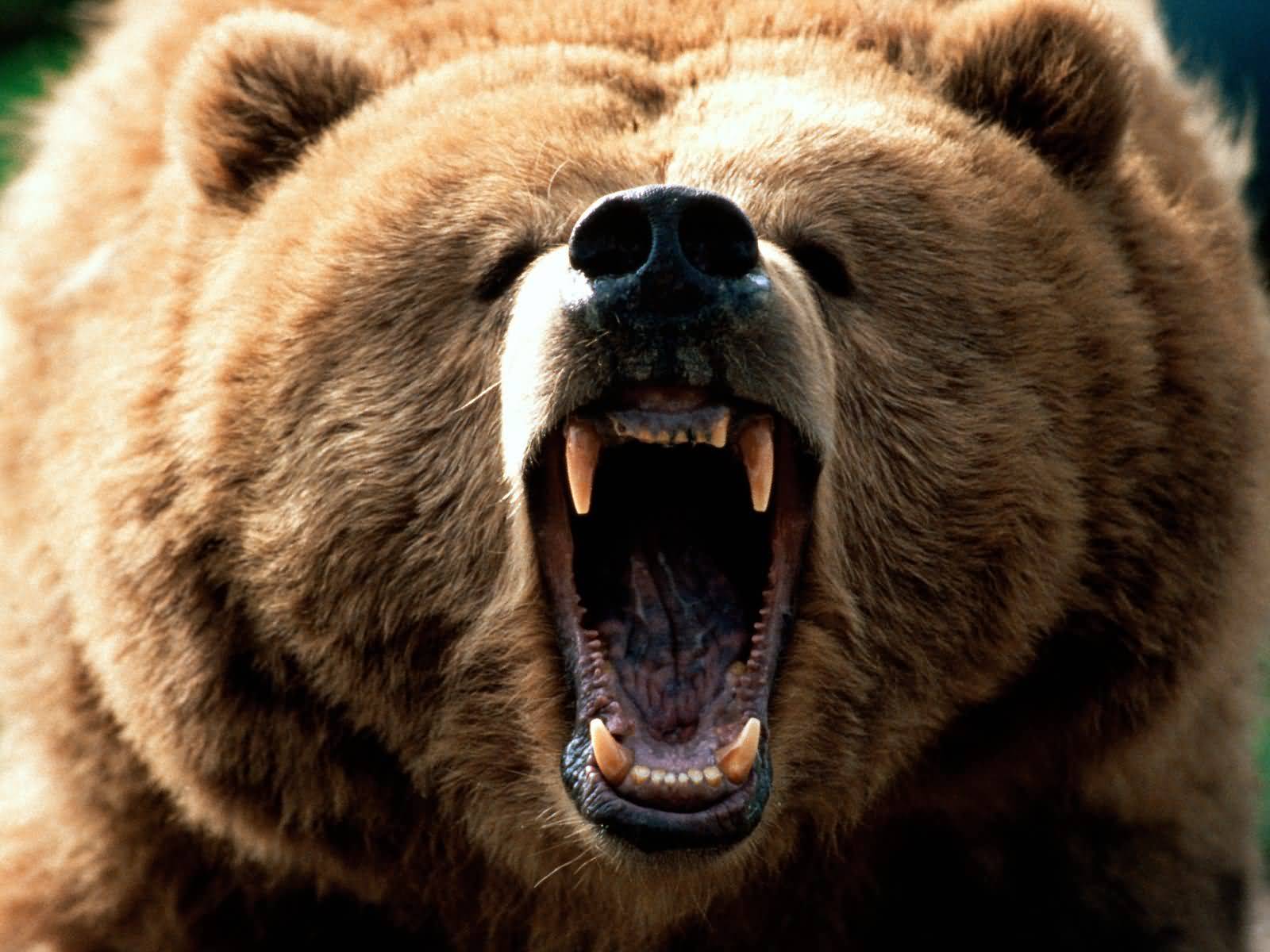
Anyone who has ever hiked the trails of Teton Valley is familiar with the sense of fear inspired by knowing they are walking in the land of the grizzlies. The awareness that there are creatures out there in the woods that are bigger than you, creatures that are physically capable of killing and eating you, is enough to instill within trail enthusiasts a sense of complete and utter humility. Out there, you are not top of the food chain. You become aware of your own fleshy vulnerability. The effect is almost primal. It awakens within you a long-dormant state of consciousness. It was this very brand of consciousness that early humans lived with.

Man's evolutionary history is very much tied with that of the Great Bear. Both men and grizzlies, for instance, crossed over the land bridge from Siberia to Pleistocene Alaska at about the same time in history. Archeological records suggest that man might even have traveled the same southern route into the continental United States as grizzlies. If this is true, then man's consciousness might very well have been directly shaped by coexistence with grizzlies and like creatures - the man-eaters.

I remember one run in particular: a group of us went hiking and about 50 yards up ahead, a big grizzly crossed our path. It didn't look our way. It didn't stop. It just ambled on. I was stunned. Our group stopped dead in our tracks and slowly backed away. My heart was pounding. My senses were alert like never before. I was alive, such a wonderful and terrifying feeling! In that one instance, when that grizzly crossed my path - although just briefly and without incidence - I began my fascination and obsession with the Great Bear. I bought books about the beast. I read all about bear attacks. I poured over the story of pioneer Hugh Glass and his famous encounter with a grizzly that would leave him mauled and stranded in the wilderness. And in all my research, I have come to several conclusions about the relationship between man and bear.

In Teton Valley, much is made of this relationship. The front page headlines of The Teton Valley News or even The Jackson Hole Daily are occasionally preoccupied with the latest bear attack. Almost always, the victim is to blame. Still, the authorities must decide whether to issue a death sentence for the offending bear or to relocate her (I say "her" because it usually is a female who attacks because she is protecting her young from a perceived threat). The whole thing a hotly political issue. We have all the rules in place: habituated bears are dangerous bears are dead bears. We force order and logic on a situation and relationship that is very often not governable by order or logic. Still, we don't want more people to get hurt, so some action is necessary.

But the possibility of death is always present despite governance. You can feel it out there. It's part of the allure of the trail. We live in a "civilized" world (though I sometimes wonder how true that statement is). Urbanization and the destruction of the last vestiges of wilderness have made it near impossible for everyday people like you and me to have real contact with nature and the primal elements. Most of us will never see a bear in its natural habitat because we have destroyed that possibility for ourselves. We deny ourselves that experience. This is why Teton Valley and the greater Yellowstone region is such a valuable, sacred place. It is a pocket ecosystem, a last remnant of a wild, scary, exhilarating world.

It is our link to the past and our key to understanding our place in the world. Places like Teton Valley - to the extent that they offer excellent hiking, mountain biking, skiing and running opportunities - are invaluable on a psychological level as well. The humility that is forced upon us on the trails, in the land of the grizzlies, is the very antithesis of human pride and greed, those traits that have lead to genocide, war, and death.

We should all be concerned with the preservation of such ecosystems and with the protection of grizzlies. We should hike intelligently and cautiously because, it is true that a habituated bear is a dead bear. We should cherish the mountains and trails because they remind us who we are at the very core. They remind us we are alive, truly and incredibly alive!